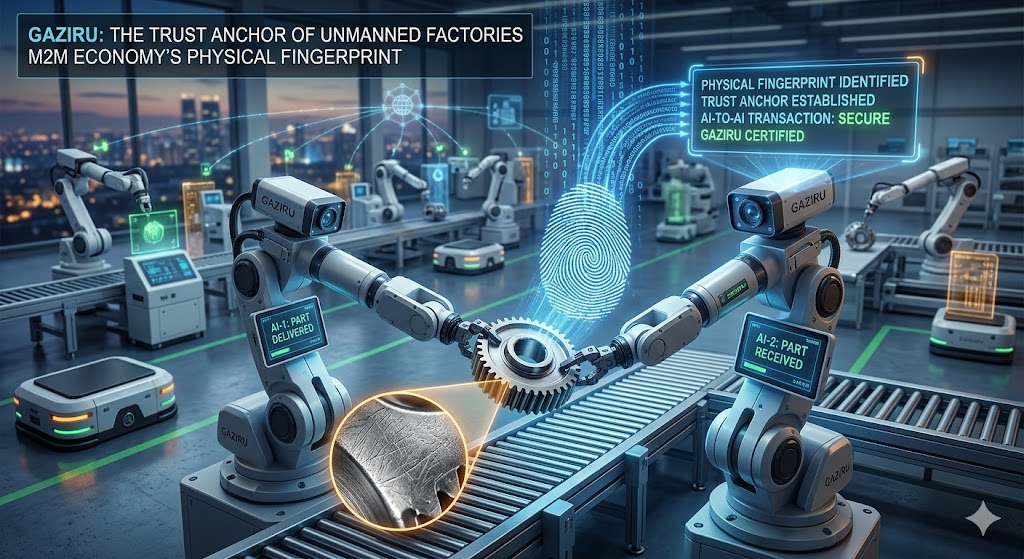
The Era of AI Hiring AI: Why "Physical Fingerprints" are the Bedrock of Unmanned Factories
Vision
Introduction In my previous post, I discussed the near future of autonomous vehicles—supporting huma...
We develop AI image recognition software for manufacturing, starting with our proprietary image recognition product GAZIRU.z (Individual Identification), which reads the fine surface patterns already present on parts and products and identifies a single individual item from an image alone — no tags, labels, or engraving.
The Era of AI Hiring AI: Why "Physical Fingerprints" are the Bedrock of Unmanned Factories
Read more
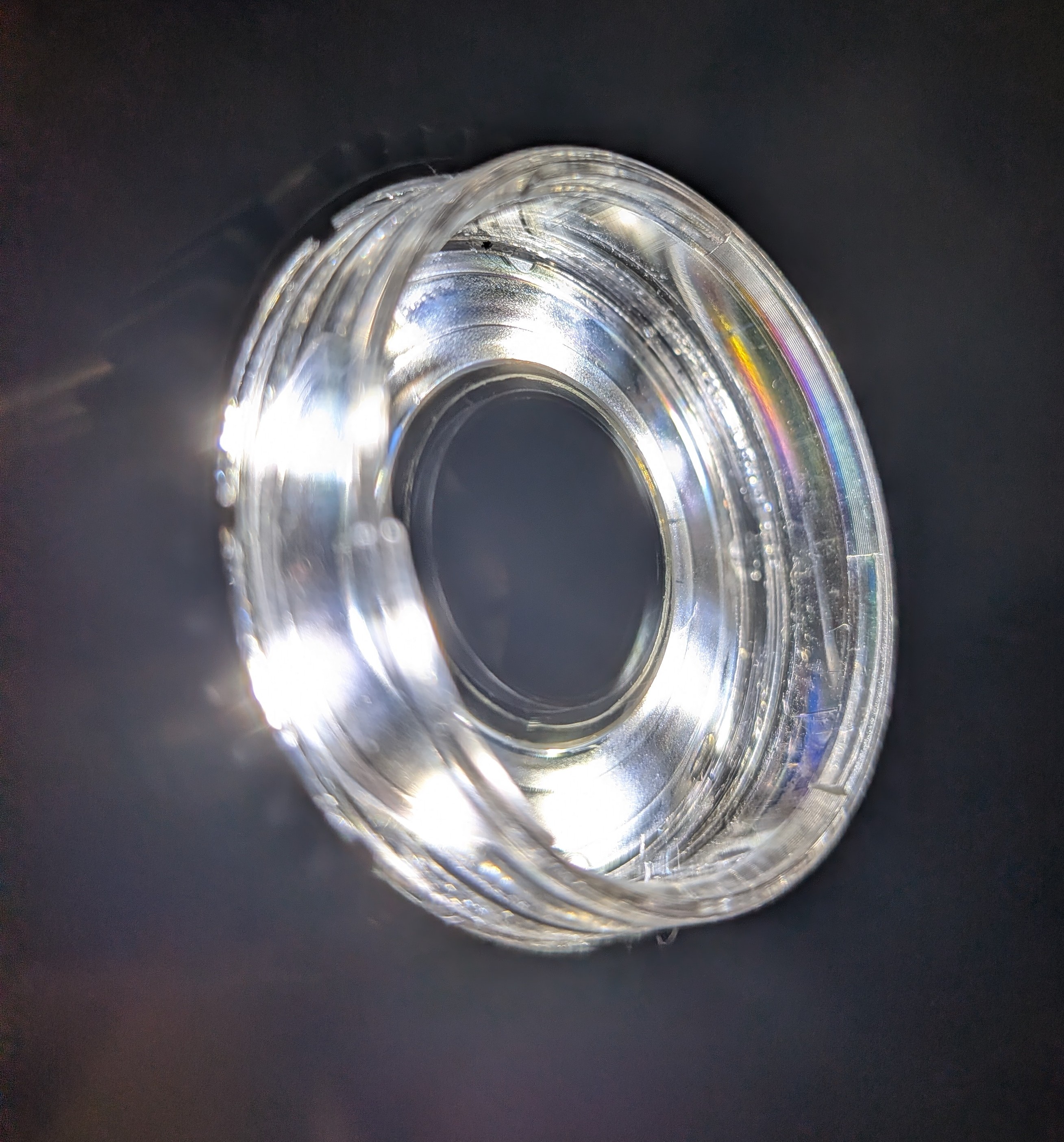
A Practical Guide to Image Capture for Individual Identification: Achieving High-Precision Inspection Through Reliable Systems
Read more
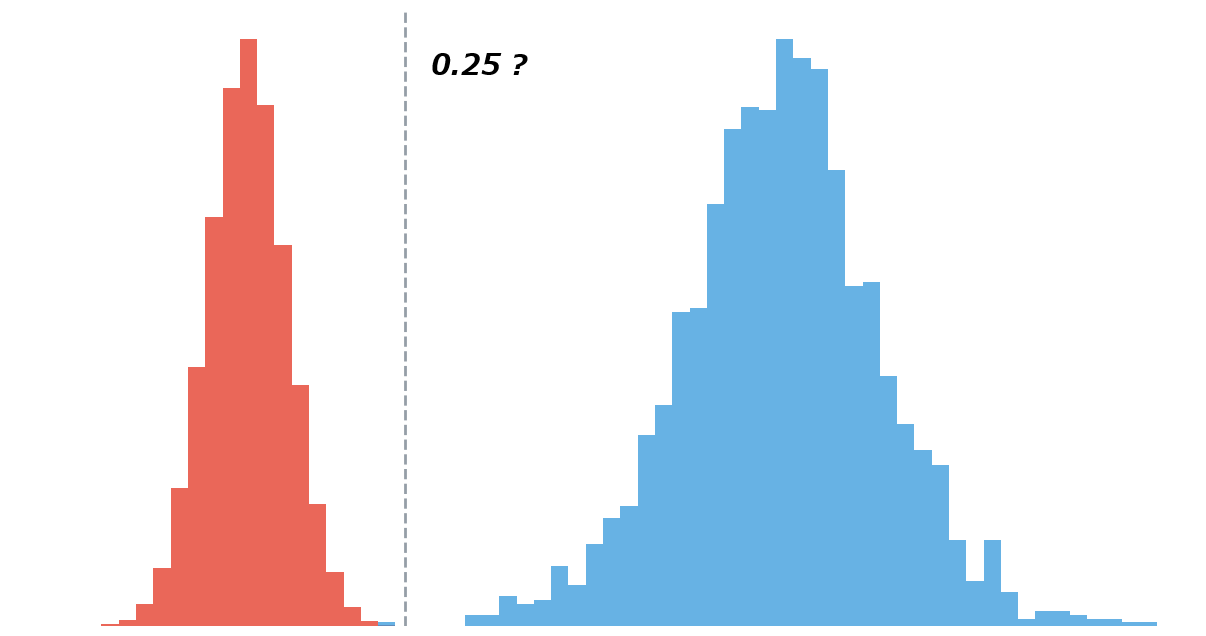
What Does It Take to Say "Individual Identification Works"? — Scores and Thresholds in Tagless Individual Identification
Read more
It's too small to tag. We assumed traceability was out of reach.
Even parts too small to tag get an ID from their own surface pattern.
Learn moreOne defective unit means recalling the whole lot.
Narrow recalls down to only the individual units with the defect.
Learn moreWe can't trace which process produced a given defect, item by item.
Link process data to each item and use it to improve yield.
Learn moreTags and labels ruin the product's design.
Manage items without attaching or engraving anything.
Learn moreLaser engraving takes time and process steps — and some materials can't be engraved.
Eliminate the engraving process entirely.
Learn moreRemoving tags before shipment costs real time and money.
Nothing gets attached, so there's nothing to remove.
Learn moreWe relabel purchased or supplied parts with our own tags to manage them.
Register the item itself, exactly as received.
Learn moreOn an unmanned line, we can't confirm a part handed from robot to robot is really the same individual.
Match the physical item at every handoff.
Learn moreWe lack skilled inspectors who can spot defects. We want to start AI inspection, but with high-mix low-volume production we can't collect defect images.
Build an inspection AI using only images of normal products.
Learn moreCounting loose parts by hand makes quantity checks and stocktaking slow.
Read type and quantity from a single photo.
Learn moreCounterfeit and substituted versions of our products are circulating in the market.
Verify whether an item is the same physical unit you registered.
Learn moreWe don't know what to link, or how, for the EU's Digital Product Passport (DPP).
Link the physical item itself to a product ID.
Learn moreWe have no way to confirm that a remote item is the exact one we registered.
Match the physical item against its digital record from a single image.
Learn moreWith lot-based management, both the cause of a defect and the scope of a recall can only be narrowed down to "the whole lot." When you can distinguish each item individually, you can link history, inspection results, and shipping destinations to that item — so recalls target only the units that need it, and improvement efforts target only the process at fault.
Tags have three weaknesses: they can't always be attached, they can come off, and they can be swapped. GAZIRU uses the fine surface patterns already present on the product as its ID, so it works even on small parts and special materials, can't come off, and can't be swapped. The steps of attaching, removing, and engraving all disappear.
GAZIRU's individual identification technology captures microscopic patterns and textures that exist naturally on product surfaces at the micrometer (μm) level, or unique patterns that occur incidentally during the manufacturing process. Simply by taking a photograph of the surface, AI extracts features from the captured content and matches them against a database to identify individual objects with extremely high precision.
Our proprietary image processing technology enables tag-free, fast and accurate individual identification across a wide range of targets simply by taking photographs
No processing or tagging of products required. Preserves aesthetics and enables individual management even for ultra-small parts that were previously difficult to manage
Recognizes minute differences and keeps misidentification low
Even on general-purpose servers, matches against a pool of one million items in around a second.※1
Works with any target without requiring object-specific learning or tuning. Supports diverse materials including metal, plastic, paper, fabric, from flat to three-dimensional objects
Easy integration with customer systems through engine interfaces (RESTful WebAPI) provided by cloud services or on-premise products installed on servers
Narrow recalls to the individual unit. Link process data to each item.
Learn moreEliminate the process and cost of tags, labels, and engraving.
Learn moreMatch the physical item at every robot-to-robot handoff.
Learn moreDetermine whether an item is the one you registered, based on identity with the registered individual.
Learn moreTurn the physical item itself into the product ID.
Learn moreGet started with normal images alone, and move to 100% inspection.
Learn moreCount and sort in a single shot.
Learn moreOur lineup is built on innovative image recognition engines: our flagship proprietary product GAZIRU.z (Individual Identification); GAZIRU.eye (Anomaly Detection), an AI visual inspection that detects anomalies by learning from only a small set of normal images; and GAZIRU.r (Planar Object Recognition) for high-speed type classification.
A server product that identifies individual items by their fine surface patterns — the core of traceability, genuine product verification, and DPP.
Learn moreAn inspection AI that learns from normal images alone and visualizes where anomalies occur.
Learn moreRecognizes multiple objects on a flat surface at once, reading their type and quantity.
Learn moreApre Co., Ltd. — In the secondary market for luxury brand goods, GAZIRU.z links appraised individual items to the physical goods on hand, streamlining condition-assessment work.
Learn moreDadway Co., Ltd. — Adopted GAZIRU.z as a countermeasure against counterfeit products for its baby carriers (Ergobaby, Japan-exclusive new products).
Learn moreIndividual identification built on image recognition technology researched at NEC over many years, advanced by GAZIRU since our 2020 spin-out.
Learn moreImage matching against a large pool tends to be slow, but GAZIRU.z matches an individual in around a second even against a pool of one million items, and adding distributed nodes scales it to larger volumes and higher speed. In real operation the matching pool can often be narrowed by lot, manufacturing month or similar for extra speed, and the latest GAZIRU.z provides this selective loading as a standard feature, so a large pool can be handled without adding servers.※1
Learn moreThe latest version adds an alignment feature that corrects position and orientation differences on the server side, raising identification accuracy further with no changes on the client side.※2
Learn moreCombine individual identification (GAZIRU.z) with anomaly detection (GAZIRU.eye) to record exactly which item had which anomaly.
Learn moreSee a glimpse of GAZIRU's individual identification technology in this actual demonstration video The video features the GAZIRU.z (Individual Identification) Server product (cloud service) and "GAZIRU Match" app, one of the iOS sample clients
The Era of AI Hiring AI: Why "Physical Fingerprints" are the Bedrock of Unmanned Factories
Introduction In my previous post, I discussed the near future of autonomous vehicles—supporting huma...
A Practical Guide to Image Capture for Individual Identification: Achieving High-Precision Inspection Through Reliable Systems
"Individual identification" using AI—it sounds like a cutting-edge, daunting concept. You might find...
From questions about shooting conditions and target objects to a matching demo environment and quotes — reach out through our contact form.
A browser-based matching demo is also available. Access keys are free and issued through our contact form.
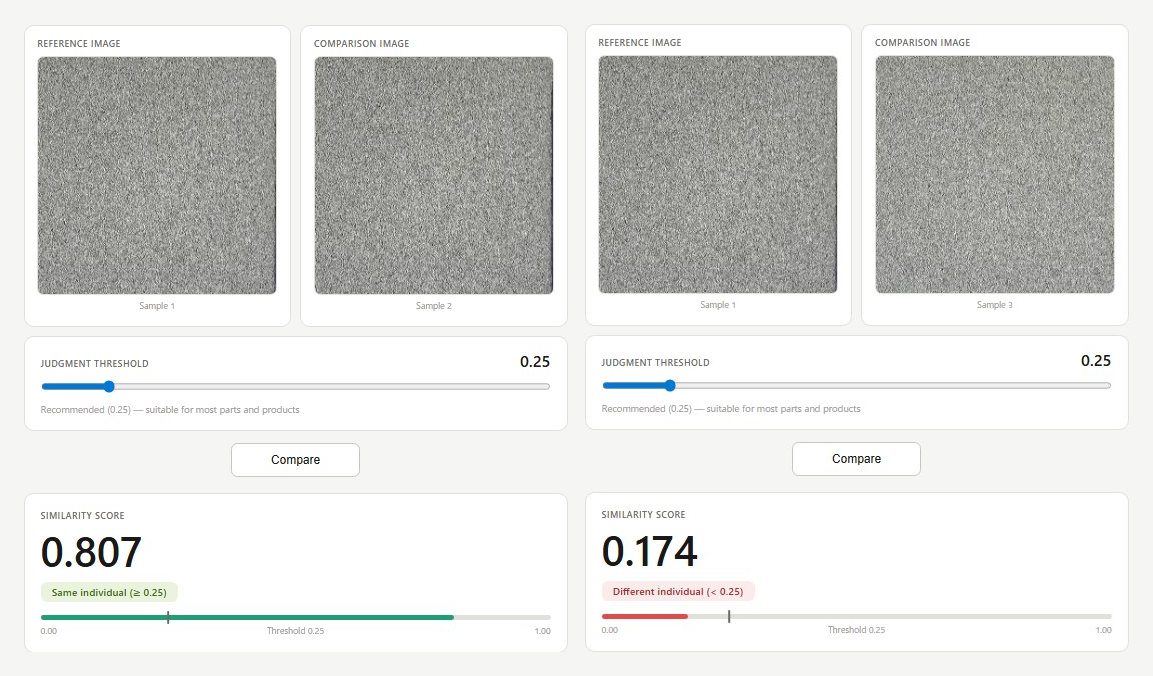
Matching demo environment (compare two images and see the score)
Notes
※1 Time to find one individual among 1,000,000 registered items: about 1.5 seconds with 3-way parallelism (without alignment; three machines with 8 physical cores / 64GB each within a public cloud platform; measured in-house in July 2026 on a GAZIRU.z V5.0.0 development build). Results for 4-way parallelism and above, or more than 1,000,000 items, are estimates based on the scaling trend confirmed by measurement. Actual response time varies with the equipment, network configuration and other conditions. With alignment enabled, response time also depends on the image content. A GPU option is available to speed up matching when alignment is enabled.
※2 The alignment feature automatically corrects, where possible, differences in shooting position and orientation at match time, and assists identification accuracy by raising the score only for the same (correct) individual.
This site uses cookies to provide site functionality and analyze usage. See theCookie Policy for details.Please choose your preferences below.